




Why Do Australians Wear Jeans?
Jeans in Australia: Why We Wear Them, Where We Wear Them, and What Actually Works on the Land

Australians wear jeans because they’re durable, practical, and versatile in our climate and lifestyle. From cattle stations and farms to regional towns and city streets, jeans protect your legs, handle hard work, and still look right when you roll into town. They’re worn by every age group — kids, tradies, farmers, station hands, and grandparents — because a good pair of jeans does one job better than almost anything else: it lasts.
And nowhere is denim more than “just clothing” than out bush — where jeans aren’t chosen for fashion points, they’re chosen for function, comfort, and the kind of reliability you can’t fake.
This is the real story of jeans in Australia — how they became a national uniform, why outback families and workers rely on them, what styles are most common (and most flattering), and which brands you’ll actually see worn on farms and stations.
The History: How Jeans Took Root in Australia

[Two stockmen at Brunette Downs Station ca. 1953]
Jeans didn’t originate here — but Australia made them our own.
Denim arrived with working people: miners, labourers, stockmen, and rural crews who needed clothing tough enough to handle heat, dust, friction, wire, and long days on repeat.
By the mid-1900s, jeans had moved from novelty to necessity, especially across regional and rural Australia. Denim held its shape, protected skin, and handled rough conditions better than lighter fabrics.
By the 1960s and 70s, jeans were everywhere — worn across the country, from city teens to country workers. But a split formed that still exists today:
- City jeans moved with trends.
- Rural jeans stayed loyal to what works.
That “function-first” mindset is why jeans are still a staple across outback Australia today.
Why Australians Wear Jeans (and Keep Coming Back to Them)


Australians don’t wear jeans because a brand told us to. We wear them because they suit the way we live.
1) Durability That Makes Sense
In the bush, you don’t buy clothes for one season — you buy them to last.
Jeans get worn for:
- mustering
- feeding stock
- fencing and yard work
- driving utes and machinery
- workshop jobs
- school runs
- heading into town
They’re a “wear them all day” option that doesn’t need a second outfit to back it up.
2) Protection Without Feeling Restricted
Denim hits a sweet spot: thick enough to protect your legs, but flexible enough to move when you’re climbing gates, stepping through scrub, or bending all day.
For station workers and farm hands, jeans can be safer and more practical than shorts — especially around scrub, wire, sun exposure, and rough terrain.
3) Identity: Looking Like You Belong (Without Trying)
In outback Australia, jeans aren’t “casual wear.” They’re normal wear.
They quietly say:
- I’m ready to work.
- I’m practical.
- I understand the environment.
No fuss. No performance. Just the right gear for real life.
Where Australians Wear Jeans
The short answer is: everywhere.
On the Land
This is where jeans earn their keep — day after day.
- cattle stations
- sheep properties
- cropping farms
- yards and sheds
- shearing sheds
- workshops and machinery sheds
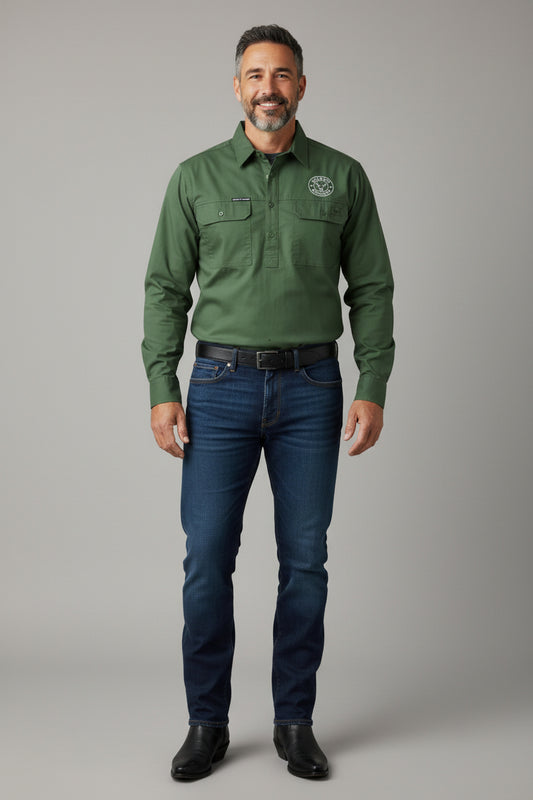
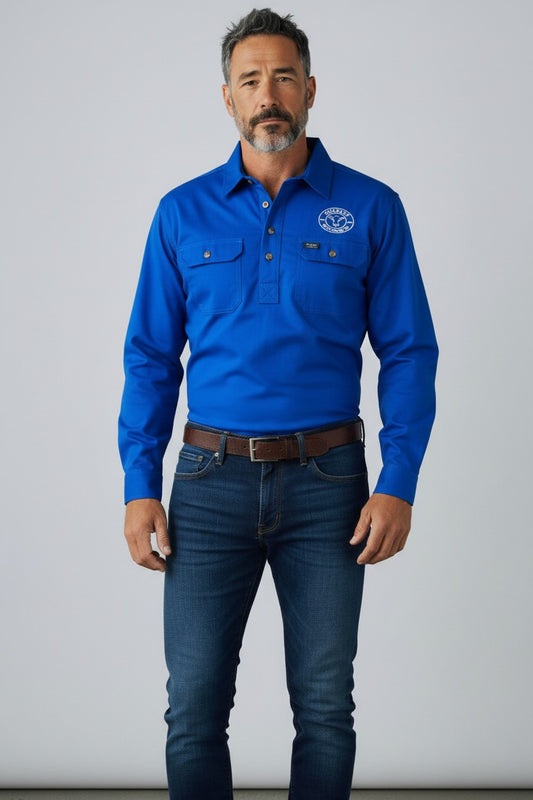
Jeans are usually paired with boots, belts, work shirts, and hats — a uniform built around function.
In Regional Towns
In rural towns, jeans are everyday wear for shopping, school pick-ups, local events, pub dinners, rodeos, campdrafts, and “quick trips” that are never actually quick.
In the City
City Australians wear jeans for comfort and versatility too — but the styles trend slimmer and lighter. In the bush, comfort and movement usually win over tight fits.
Who Wears Jeans in Australia? (Age Groups)
One reason jeans have stayed so dominant is simple: every generation wears them.
Kids & Teens
From farm chores to weekend sport, jeans survive the rough-and-tumble years. They’re practical, low-maintenance, and tough enough to keep up.
Young Adults (18–30)
This includes station hands, apprentices, rural workers, and backpackers starting their first season out bush. Jeans help people feel prepared — and in rural culture, that matters more than most admit.
Adults (30–55)
Peak denim territory: farmers, contractors, tradies, parents, and business owners who need clothing that can do work and still look decent in town.
Older Australians (55+)
Comfort and familiarity rule. Many prefer straight-leg and relaxed fits, often with mid-to-high rises for security and ease.
Most Common Jean Styles in Australia (and What’s Most Flattering)


Forget runway trends. In Australia — especially regional and rural areas — the most common jeans are the ones that fit well, move well, and last.
The Most Common Styles
- Straight-leg (the outback classic)
- Relaxed fit (room to move, room to breathe)
- Mid to high rise (practical and comfortable for bending/lifting)
- Mid to heavier denim weights (better for hard wear)
What’s Most Flattering (Without Trying Too Hard)
Flattering doesn’t mean tight. It means balanced — and wearable in real life.
- Straight-leg suits most body types and works with boots.
- Mid-rise avoids waistband discomfort when sitting, driving, or bending.
- Mid-to-dark washes hide dust and scuffs better than light denim.
- Minimal distressing looks more versatile for work, town, and events.
Tip: If you want one “do-it-all” pair, start with a straight-leg, mid-rise, mid-wash denim. It’s the most useful, most forgiving option across Australia.
Outback Families & Workers: Jeans as a Way of Life

For outback families, jeans aren’t an outfit choice — they’re part of the household rhythm.
- Kids grow up in them.
- Parents rely on them.
- Work and home life blend together.
Jeans get worn while packing lunches, fixing troughs, checking water, cooking meals, loading dogs, driving long distances, and doing the thousand small jobs that make up life on the land.
They’re washed, worn again, patched, worn again… and eventually replaced with another pair that’s just as dependable. Out bush, consistency beats novelty every time.
Is There a “Best” Brand of Jeans Worn by Australians?
The honest answer is no — there isn’t one single jean brand worn by every Australian.
But there are trusted brands that consistently show up in rural and outback Australia because they’ve proven themselves where it matters: in the real world.
Across farms, stations, sheds, and regional towns, brands like Wrangler, S. Kidman, and Pilgrim Jeanswear are commonly worn — not because they’re trendy, but because they understand the realities of work, movement, and durability.
These are the kinds of jeans people buy again after the first pair finally wears out. Strong stitching, sensible cuts, reliable denim weight, and comfort over long days matter far more than fashion cycles. In rural Australia, loyalty is earned through performance, not advertising.
The best jeans are the ones that fit your body, suit your work, and still feel right at the end of day three.
Jeans Buying Guide for Farmers & Station Workers

If you’re buying jeans for the land — not just weekends — here’s what to look for. This is the “buy once, buy right” checklist.
1) Choose the Right Fit for Movement
- Straight-leg: The safest all-rounder. Works with boots, doesn’t cling, suits most builds.
- Relaxed fit: Best for hot days, big movement, and long hours in the saddle/ute.
- Slim fits: Fine for lighter duties, but can feel restrictive for fencing, squatting, and climbing.
2) Denim Weight Matters More Than People Think
Lighter denim feels good in the change room. Heavier denim feels good after month two.
- For daily hard work: look for mid-to-heavy weight denim.
- For heat + lighter duties: mid-weight is usually the sweet spot.
3) Check the Stitching and Stress Points
If jeans fail early, it’s usually in the high-stress areas: inner thigh, seat, pockets, and knees.
- Look for reinforced stitching and strong seams.
- Avoid overly thin fabric around pocket openings if you carry tools.
4) Rise: Mid or High is Usually Best for Work
If you’re bending, lifting, driving, or riding, a mid-to-high rise is usually more comfortable and secure than low-rise cuts.
5) Pick a Wash That Matches Reality
- Mid wash: Most practical. Hides dust, still looks tidy in town.
- Dark wash: Can look sharper, but shows dust more on some properties.
- Light wash: Can look great, but is less forgiving day-to-day out bush.
Buying guide tip: If you only buy one pair for the season, go straight-leg, mid-rise, mid-wash, mid-to-heavy denim. That’s the closest thing to an “Australian work jean uniform.”
Common Questions Australians Ask About Jeans
What jeans do farmers wear?
Most Australian farmers wear straight-leg or relaxed-fit jeans made from durable, mid-to-heavy weight denim. These styles allow movement, work comfortably with boots, and hold up to long days of physical work like fencing, machinery jobs, and livestock handling.
Are Wrangler jeans good for work?
Yes — Wrangler jeans are widely regarded as good work jeans, especially in rural and outback Australia. They’re known for durable denim, practical fits, and designs that suit boots and active work. Many farmers and station workers choose them for comfort over long hours and toughness in harsh conditions.
What jeans last the longest in Australia?
The jeans that last the longest in Australia are typically made from heavier-weight denim, have reinforced stitching, and come in classic cuts like straight-leg or relaxed fit. Longevity depends on construction and use, but work-focused jeans generally outlast lightweight, fashion-first denim when worn daily.
The Bottom Line: Why Jeans Will Always Belong in Australia
Fashion changes. Trends rotate. But jeans endure in Australia because they align perfectly with how Australians live — especially beyond the city limits.
They’re honest. Hard-wearing. Comfortable. Adaptable. Unpretentious.
From outback families to station workers, from kids to grandparents, jeans remain a shared thread across generations.
Not because they’re iconic.
Because they work.
Because in Australia, clothing isn’t about trends — it’s about what lasts.